Vegan wine:
What does it actually mean?
Vegan wine: Is that possible? Absolutely.
Grapes are plant-based – of course. However, not every wine is automatically vegan. This has less to do with what ends up in the bottle, but rather how it gets into the bottle.
Vegan or non-vegan? – That is the question
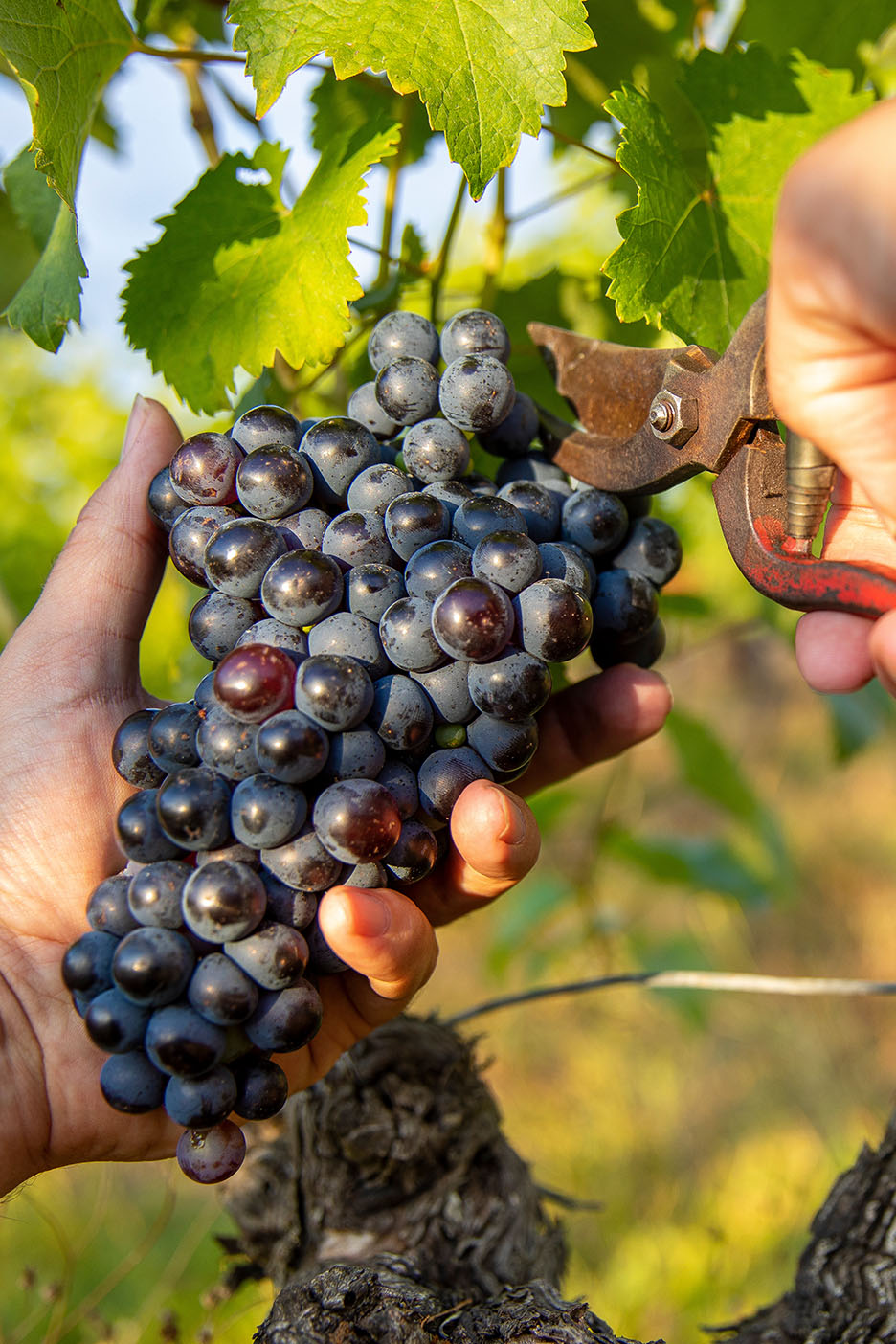
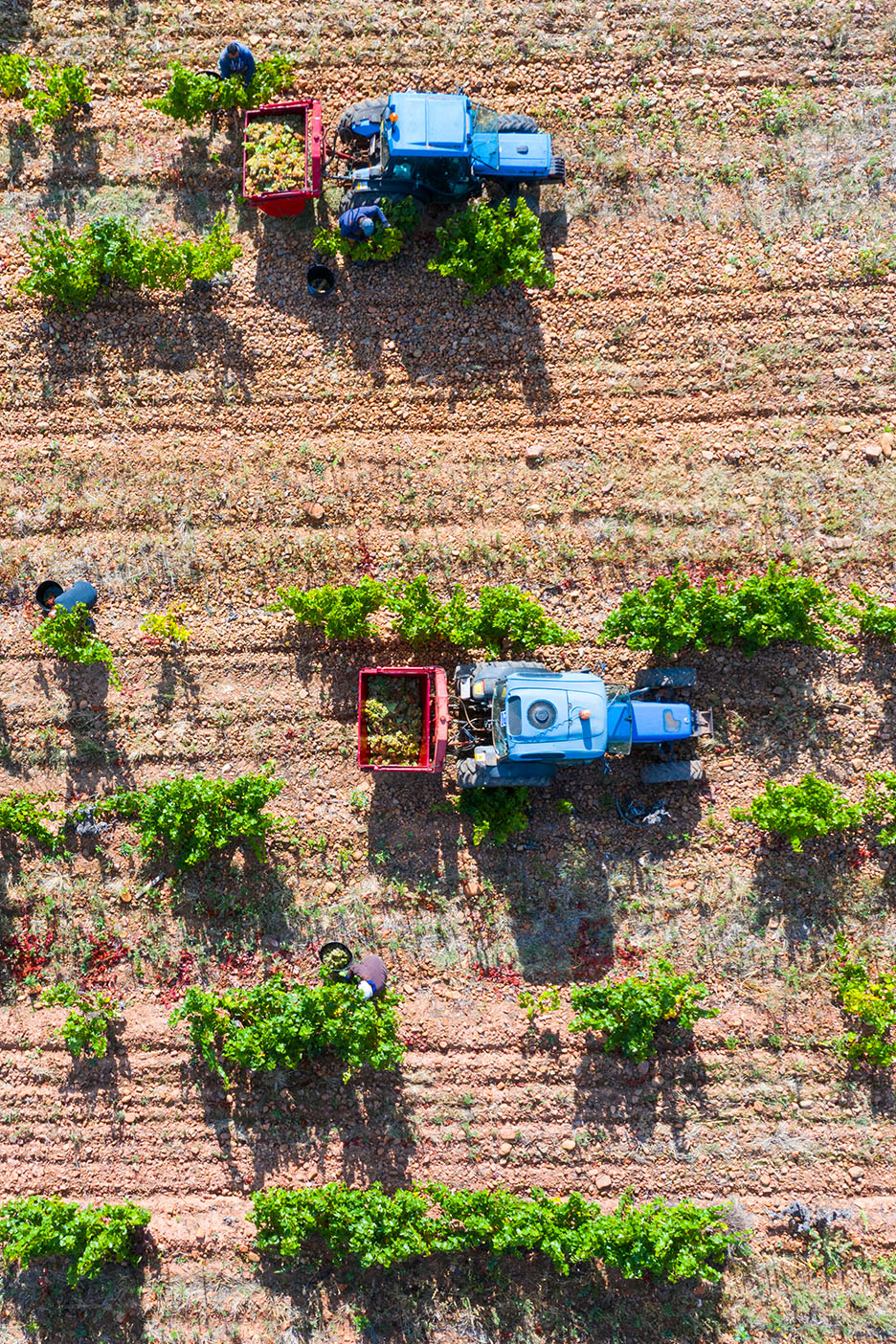
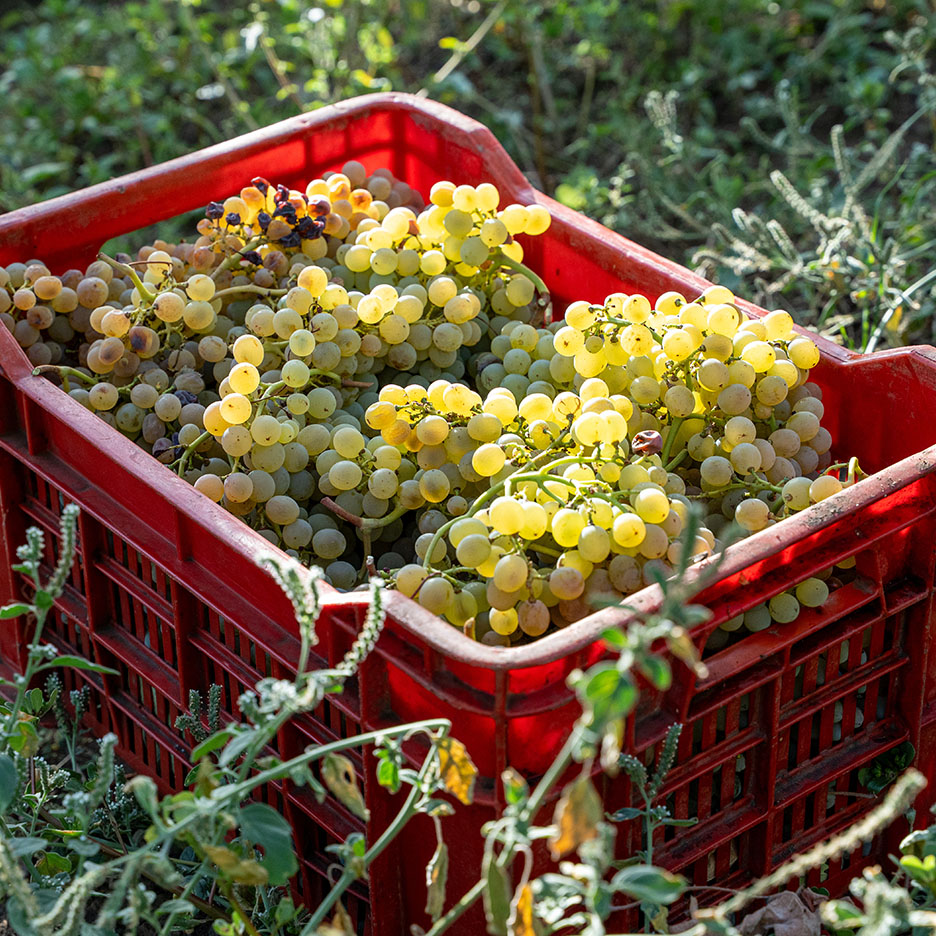
Grapes go into both wines. They are harvested, pressed and fermented in the same way. Before bottling, the wine is filtered to remove any sediment. To put it simply: it is spruced up for sale. This is the step where vegan and non-vegan wines part ways. Traditionally, animal-derived fining agents such as egg white or gelatine are used. In vegan wines, these are replaced by plant-based alternatives like bentonite (mineral clay), activated charcoal or plant proteins. Sometimes, however, the winemakers simply wait for the sediment to settle naturally on its own.

Enjoyment remains enjoyment
When it comes to taste, there is no difference. It contains the exact same thing, just filtered differently. This means for your next dinner: the vegan Sauvignon Blanc still pairs perfectly with green asparagus, the vegan Pinot Noir with mushroom risotto, or the vegan Riesling with cauliflower. The best way to recognise vegan alternatives is by labels such as the V-Label or the Vegan Flower. By the way, sparkling wine can also be vegan; the base wine is what matters. So, the topic doesn't end with red or white. Enjoying vegan works in many variations – with absolutely no compromises in your glass.