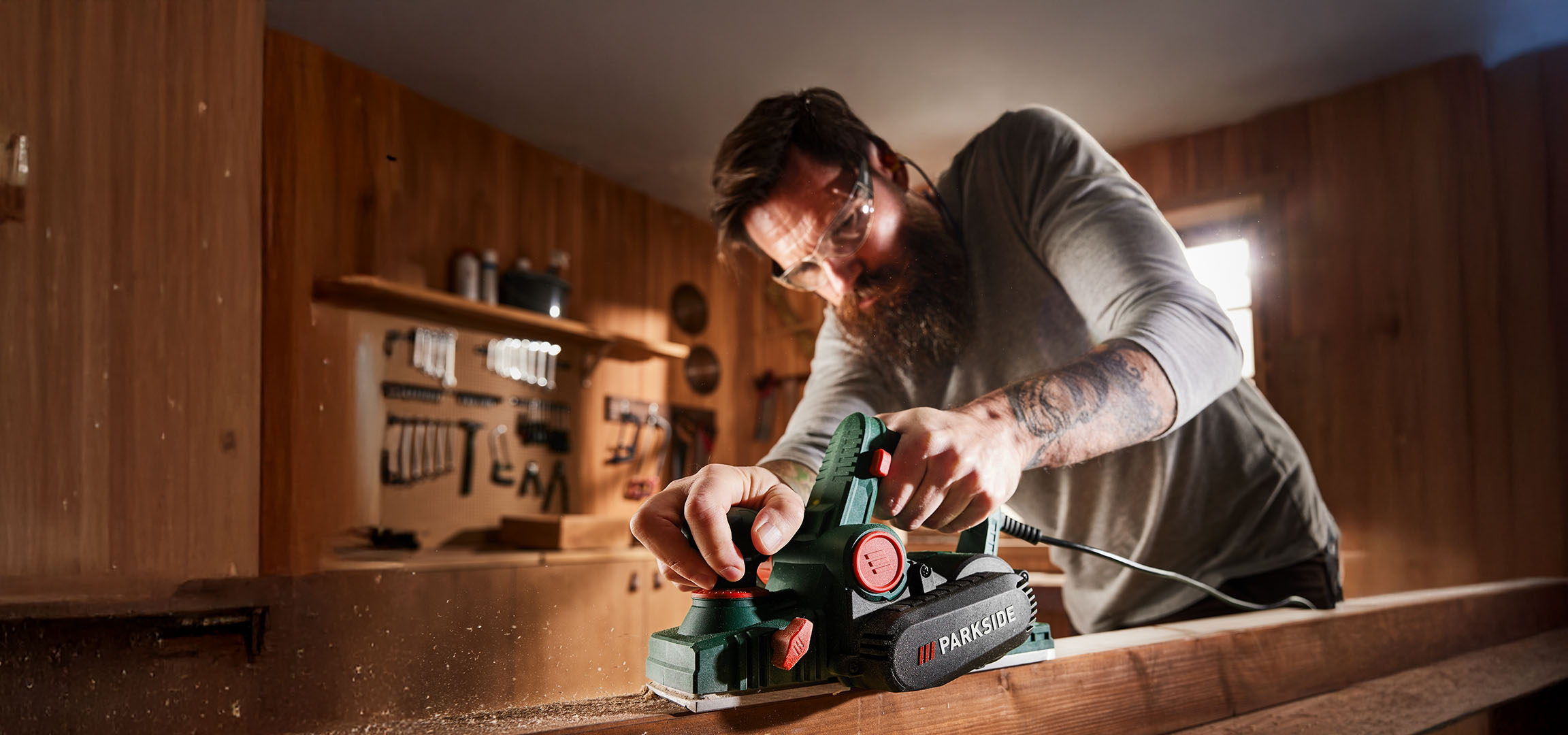
Correct planing: This is where shavings fallPlaning, like drilling or sawing, is a woodworking technique used for levelling and smoothing surfaces. Nowadays, not only hand planes but also modern electric planes are used for these work steps.this article provides you with practical tips, step-by-step instructions for planing straight wooden surfaces and answers to the most frequently asked questions about planing so that you are prepared for any eventuality.would you like to set your planer blade correctly or simply sharpen it to achieve particularly good results? Then take a look at our other articles on the subject of planing!
Choose the cutting angle according to the material
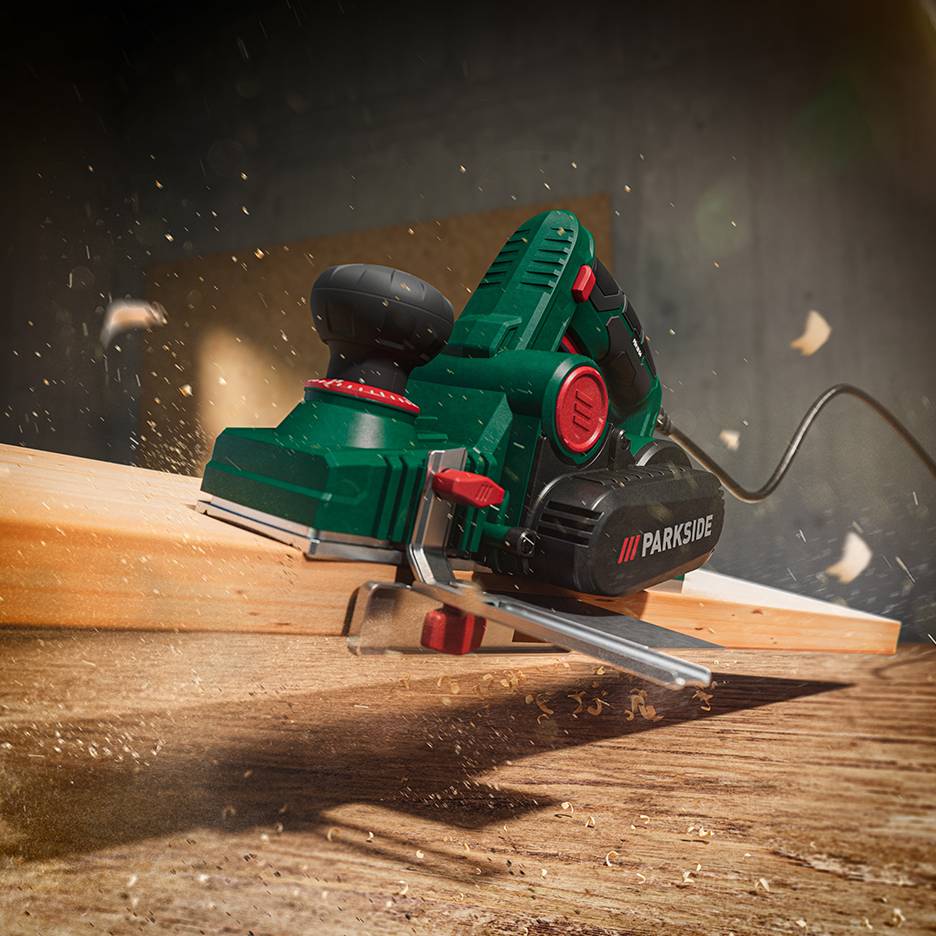
The cutting angle refers to the angle between the knife's cutting edge and the surface of the wood. It is adjusted to different types of wood when planing:
Holzart | Winkel |
|---|---|
Nadelholz | 35°-45° |
Laubholz | 40°-55° |
Tropisches Holz | 50°-65° |
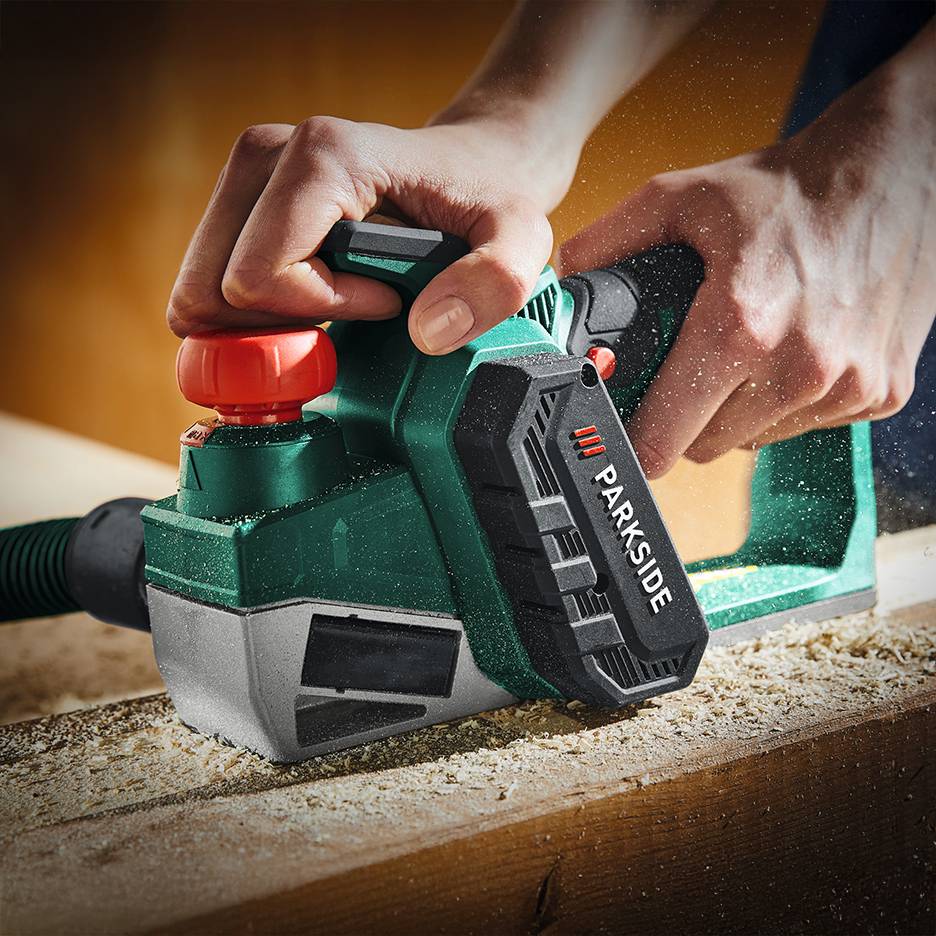
The right technique is crucial when using a hand planer. Although the work requires more power and time compared to an electric planer, the surface result benefits. Planing large surfaces is much quicker with an electric planer, but the result is generally less fine. In addition, fine lines at right angles to the planing direction, so-called planing strokes, can appear on the surface if used incorrectly.