Sandpaper: How to find the right grit
For a clean, precise, and easy finish when smoothing or polishing, nothing beats sandpaper. Which sandpaper is suitable for which job and how do you find the right grit? Find all the tips in our comprehensive sandpaper guide!
What is sandpaper?
Sandpaper is a type of paper coated on one side with small, irregularly shaped abrasive grains. During sanding, these grains scratch the surface of the workpiece, removing material. Depending on the size of the grains, the sandpaper provides coarse or fine abrasion with each pass.
Since its invention, sandpaper has been made of 4 layers:
- Backing material: a robust, tear-resistant material like paper (for DIY projects and crafts) or fabric and vulcanised fibre (for industrial use).
- Base coat: a layer of glue or synthetic resin that holds the backing and abrasive grains together.
- Abrasive grains: the actual “tool”, made of aluminium oxide (corundum), silicon carbide or diamond.
- Top coat: a final layer of synthetic resin or glue to prevent the grains from wearing away. It is often coloured to help identify the sandpaper grit.
Did you know?
Sandpaper is also known as emery paper because the abrasive grains were originally made from natural sand or emery.
What is sandpaper used for?
Sandpaper is an essential accessory for many finishing touches and DIY projects. You can use it for tasks such as:
- Sanding wood
- Polishing metal
- Rounding edges
- Deburring workpieces (removing sharp edges)
- Smoothing plaster
This makes sandpaper just as indispensable for upcycling furniture as it is for renovating a wall or removing rust.
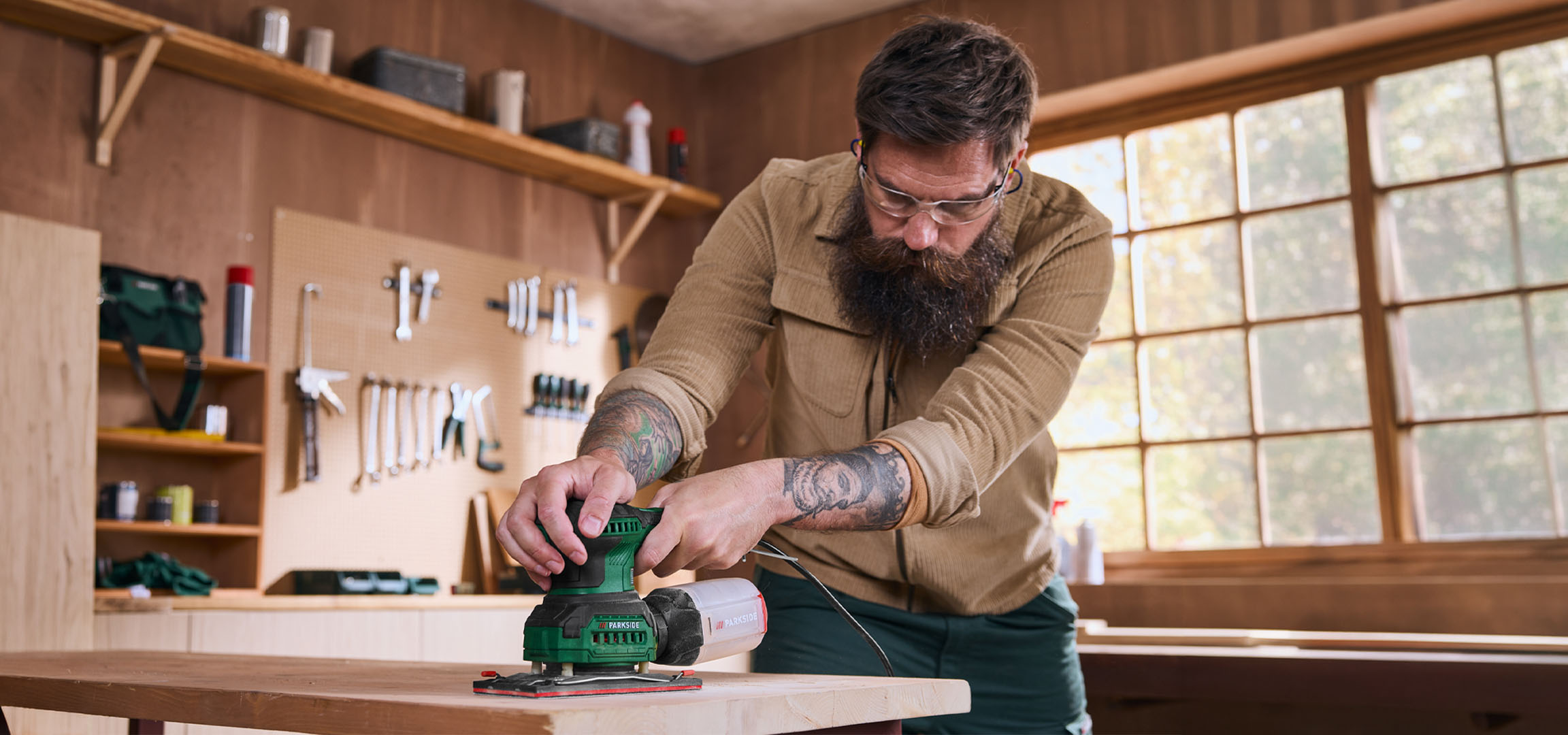
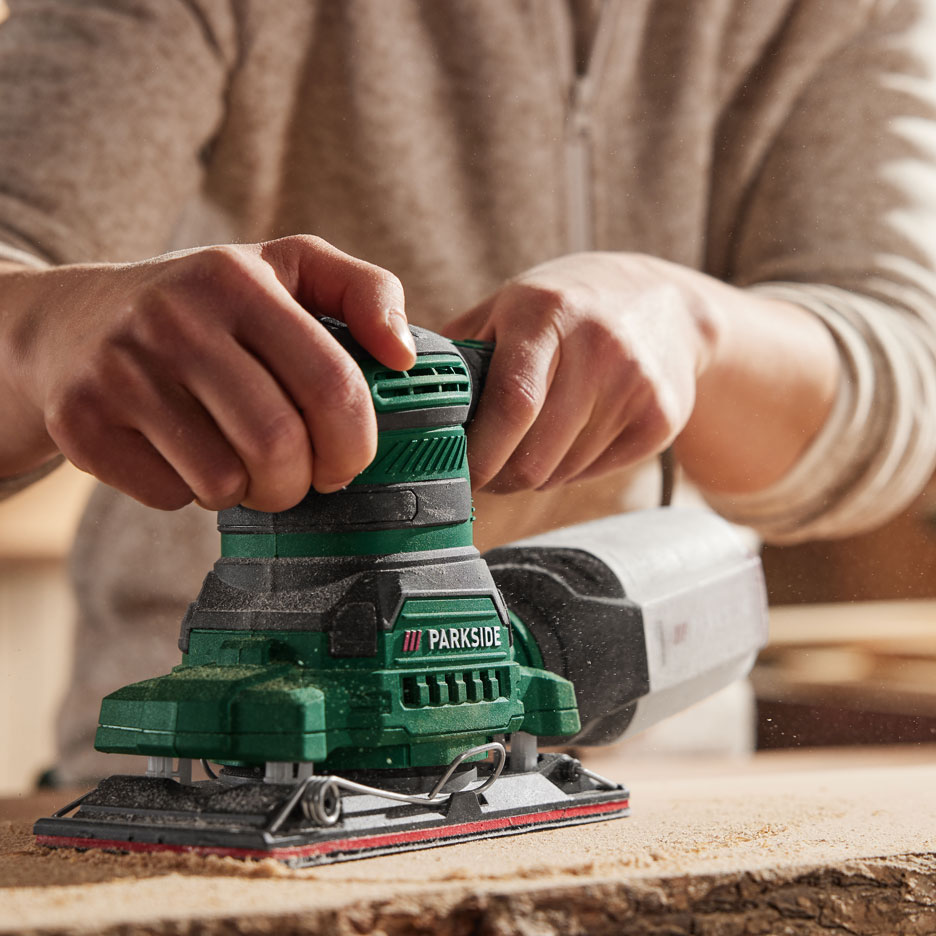
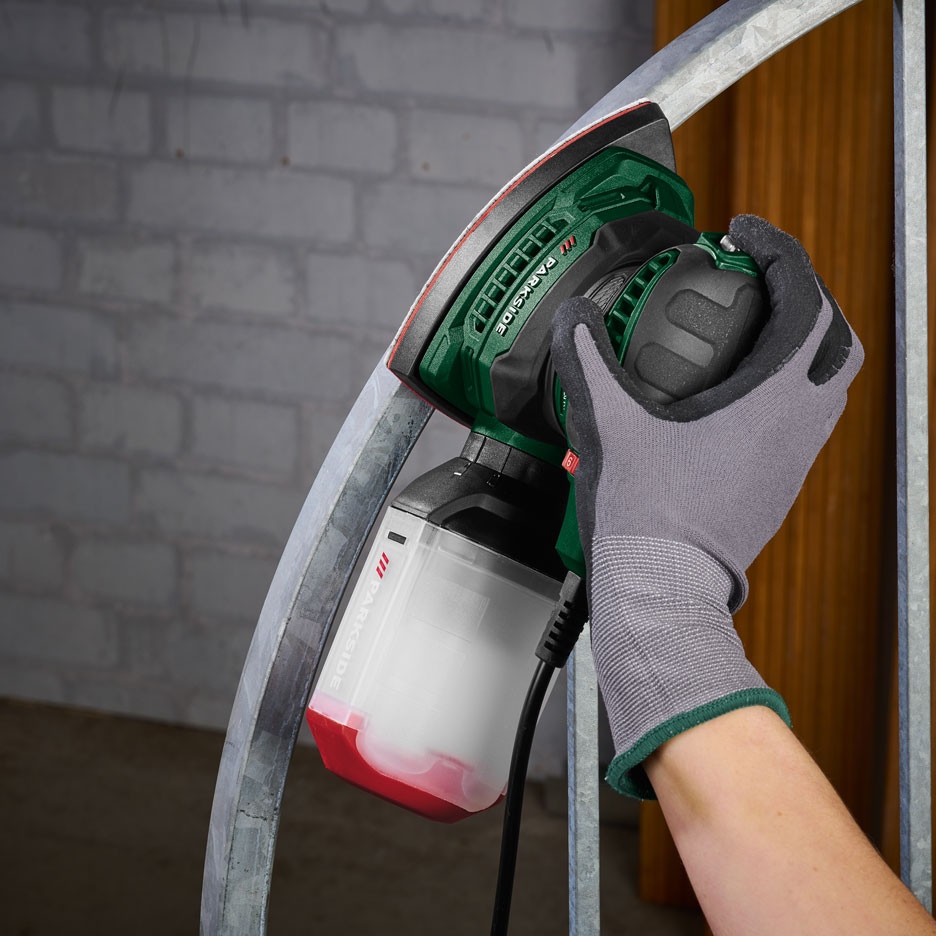
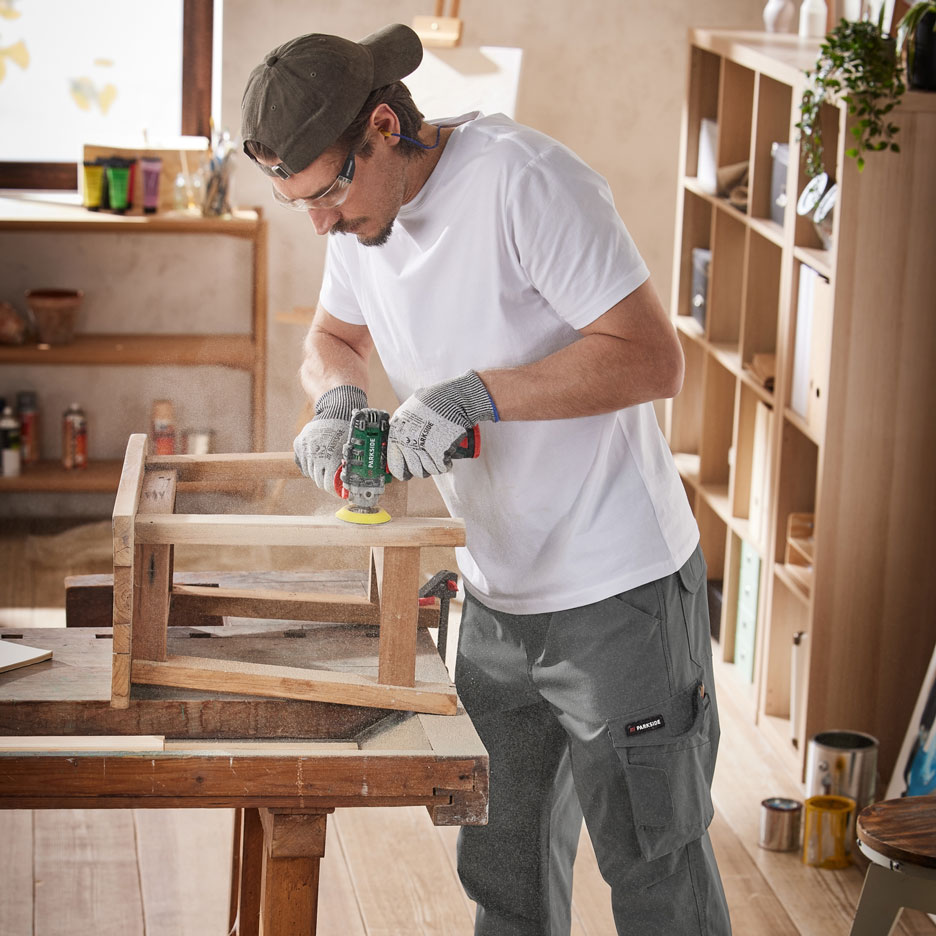
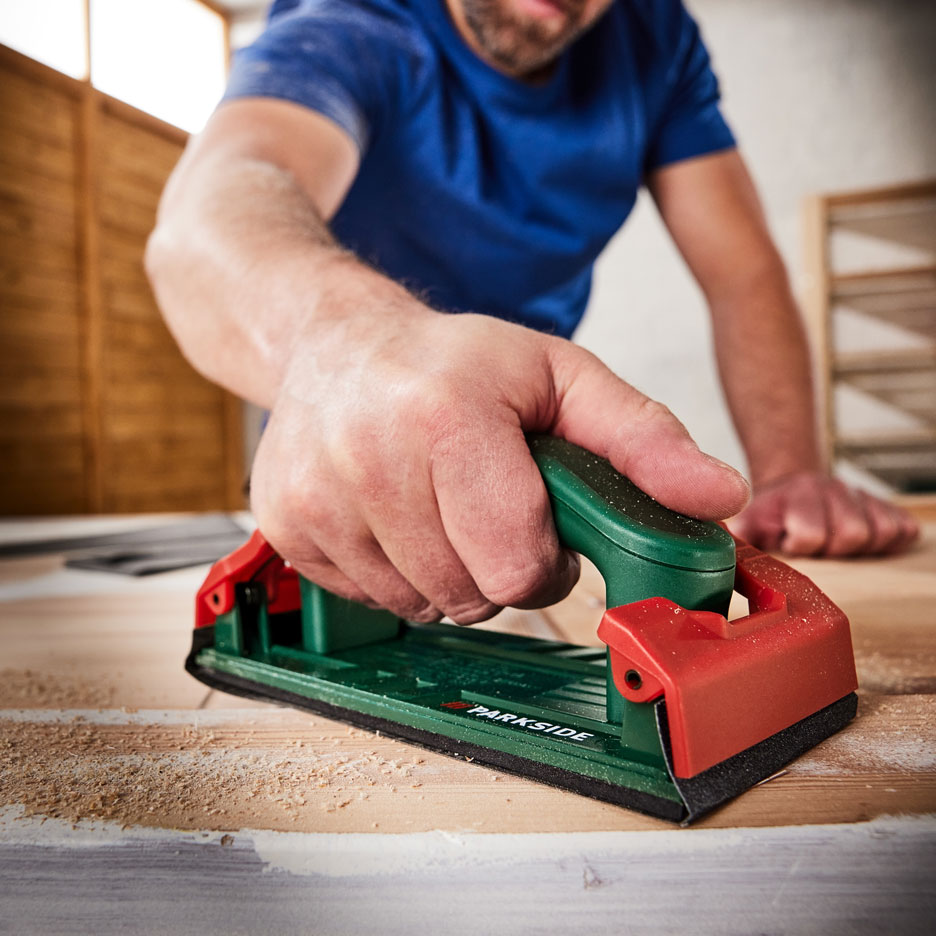
Depending on the task, you can use sandpaper either by hand or with a sanding machine. As a rule of thumb: the more delicate and small the workpiece, the better it is to work by hand. For large surfaces, it's best to use a power tool.
Choosing the Right Sandpaper Grit – Chart & Tips
The most important factor when choosing sandpaper is the grit. This refers to the size of the abrasive particles, which determines how much material is removed. The rule is: the higher the grit number, the finer the sanding; the lower the grit number, the coarser the sanding.
Sandpaper grit is standardised according to FEPA (Federation of European Producers of Abrasives). The grit number always starts with a "P" followed by a number:
- P12 to P30: coarse
- P30 to P80: medium-coarse
- P80 to P180: fine
- over P180: very fine
When sanding, you should always work your way from a coarse to a fine grit, which means you will use several different sandpaper grits. The recommendations for typical jobs are as follows:
Aufgabe | Empfohlene Körnung |
|---|---|
Wand schleifen per Hand (aus Stein oder Rigips) | P60 bis P80 |
Abschleifen von Parkettkleber oder Estrich | P24 bis P30 |
Alte Farbe oder Lack von Holz entfernen | P80 bis P240 |
Holz anschleifen vor Lackieren | P180 |
Holz glätten | P80 bis P280 |
Kratzer im Autolack entfernen | P3000 bis P5000 |
Metall polieren | P150 und feiner |
Metall entgraten | P60 und feiner |
INFO:
Consider the coating density!
Coating density refers to how closely the abrasive grains are packed together on the sandpaper. There are three categories:
- Open coat: 50 to 70% of the surface
- Semi-open coat: 70 to 80% of the surface
- Closed coat: almost 100% of the surface
The more open the coat, the less material is removed. An open coat is therefore ideal for materials that tend to clog, such as resinous softwoods or soft layers of varnish. A closed coat, on the other hand, is used for hard materials like ferrous metals, as very little material gets stuck between the grains. A semi-open coat is the all-rounder for hardwood, plastic and non-ferrous metals.
Questions & Answers about Sandpaper
You should change the sandpaper when it is removing noticeably less dust or the sanding surface feels smooth.
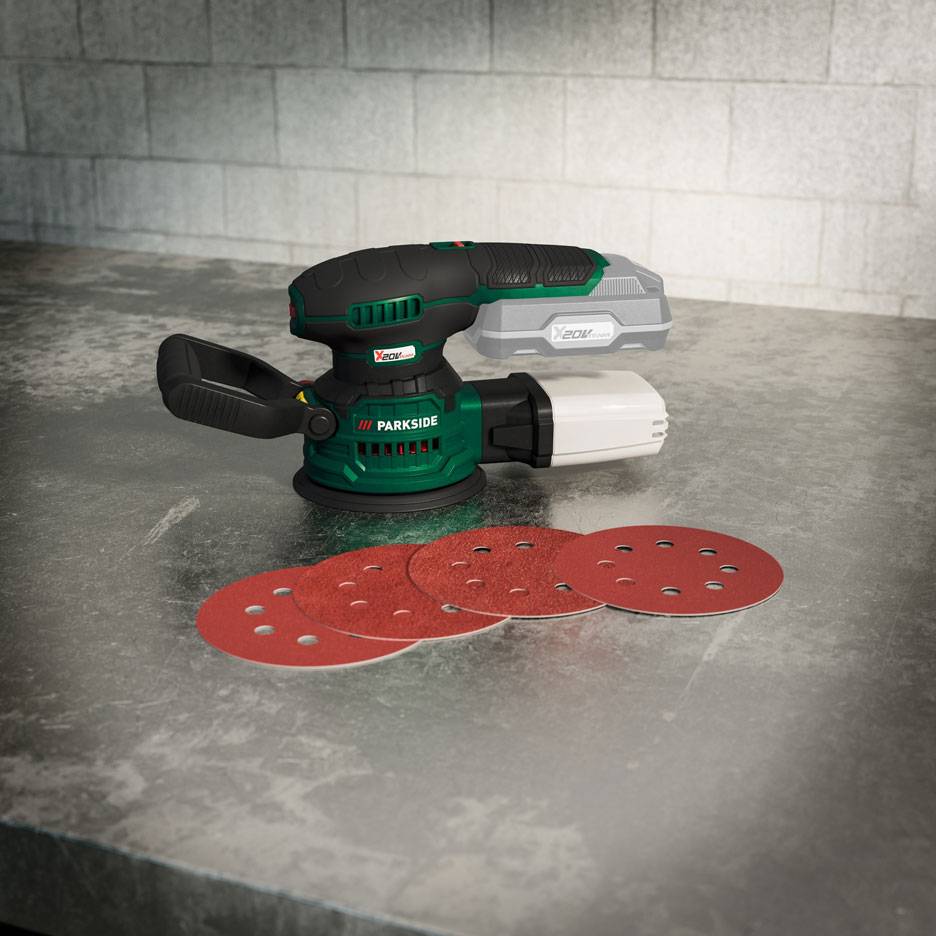
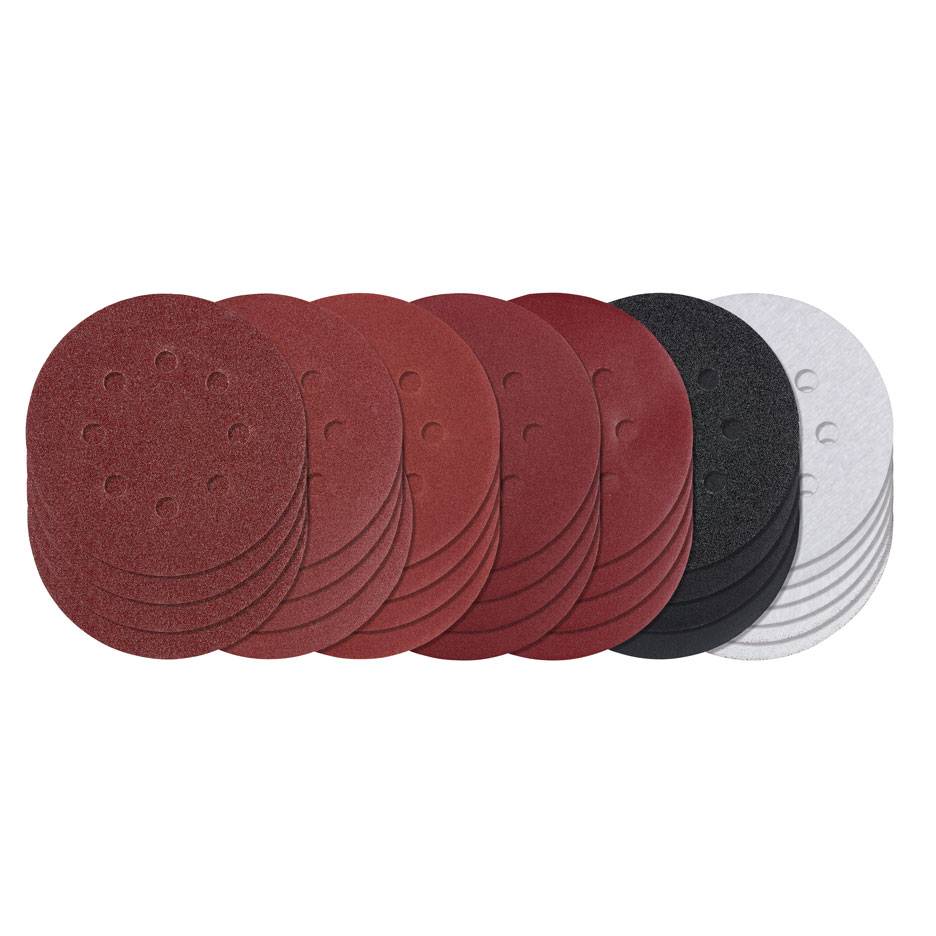
Some sanders have a built-in dust extraction feature. This works using the holes found on certain types of sandpaper.
When removing scratches from car paint, extremely fine sandpaper is used to remove as little material as possible.
For wet sanding, sandpaper with a full synthetic resin bond is ideal. Vulcanised fibre and fabric backings also increase the lifespan of sandpaper when used with water.
Specially shaped sanding belts are available for belt sanders, designed not to tear during use.